


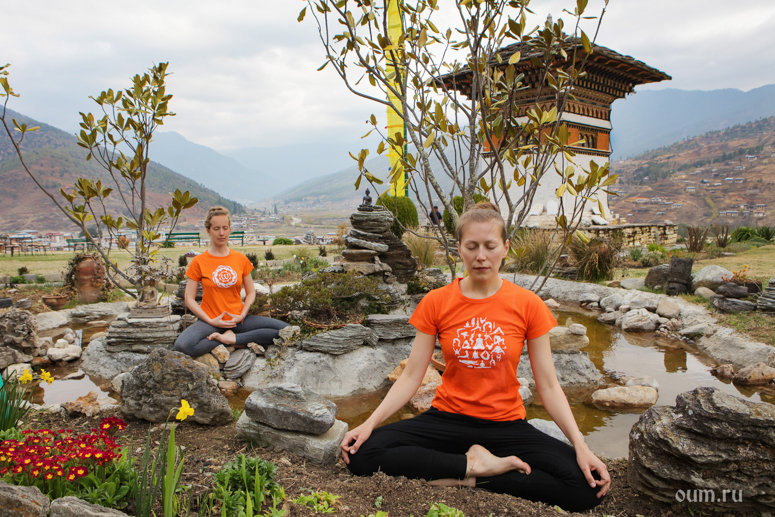

Pranayama Nadi Shodhana. Stage 3

The inner retention of breath is callen many names in Sanskrit: it is known as antar, antaranga, abhyantara or poorna kumbhaka. We will adopt the name antar kumbhaka, where the word antar means ‘inner’ and kumbhaka means ‘breath retention’. In other words, antar kumbhaka is the practice where the breath is held inside the lungs.
Scriptural references
Kumbhaka is widely mentioned in the ancient yogic texts for it is a very important practice. The ancient text called the Hatha Yoga Pradipika in particular, discusses it a great length. The following are a few extracted quotations: “He who can do kumbhaka for some time will increase digestive fire and hear the internal cosmic sound (nada). The body will become purified and free of disease.”
“During kumbhaka the mind becomes steady and one experiences timelessness. One is able to concentrate intensely on the trikuti (the eyebrow centre).”
The last statement especially indicates the importance of kumbhaka as a premeditation technique. By doing kumbhaka one’s concentration is automatically intensified.
The text emphasizes and warns people who practice kumbhaka to be careful: “A ringmaster tames a wild animal slowly and systematically. In the same way, one should gradually tame the prana in the body through the practice of kumbhaka. If one tries to break in and master a wild tiger of elephant too quickly without sufficient care, one can easily be injured. Similarly if you try to control the prana in the body too rapidly and forcefully then this will also cause harm.”
Technique
Stage 3
After competing the preliminaries begin stage 3 as follows:
1. Breathe in slowly through the left nostril keeping the right nostril closed. The duration of inhalation should be the same duration of inhalation reached at the end of stage 2.
2. At the end of inhalation close both nostrils and retain the air in the lungs. If you with you can slightly contract the glottis to imprison and firmly hold the air within the lungs.
3. Hold your breath (kumbhaka) for a short duration without incurring the slightest strain or discomfort.
4. Then breathe in slightly through the right nostril and then slowly breathe out through the right nostril. This slight inhalation at the end of inner retention (antar kumbhaka) helps to bring the respiratory muscles back into action again and releases the locked condition of the glottis.
The exhalation should not be in one gasp but must be controlled, the duration being twice that of inhalation (i.e. the same as the duration achieved at the end of stage 2).
5. At the end of exhalation, breathe in through the right nostril, keeping the left nostril closed. The duration should be the same as the previous inhalation through the left nostril.
6. Then again do antar kumbhaka for a short, comfortable length of time.
7. Breathe in slightly through the left nostril and then breathe out through the same nostril. The exhalation should be twice that of inhalation. The end of exhalation through the left nostril terminates 1 round.
8. Breathe in through the left nostril to start the second round. Continue in this manner for as long as time permits and for as long as you feel comfortable.
Precautions
Though antar kumbhaka is a seemingly simple and straightforward practice, it does have vast repercussions on the body and mind. You must be alert to any adverse reactions. These can take a variety of forms from excessive spots on the skin to the inability to sleep. In the first case the kumbhaka is rapidly purging the body of inherent impurities, because of the rapidity, the poisons are causing numerous spots to erupt on the skin as they are expelled. In this case reduce or even stop the practice of kumbhaka for a short time to allow the body to cleanse itself more slowly. In the second case, kumbhaka is in a sense overcharging your body and mind above its normal level of activity. Reduce or stop your practice for some time. There are many other possible adverse reactions that can occur. Be alert to them and if you need advice seek the guidance of a competent yoga teacher.
Benefits
A large percentage of diseases are caused by disruptions and disturbances within the pranic body and mind. Nadi shodhana pranayama, especially when it incorporates antar kumbhaka, is a powerful and direct method as bringing about harmony into these areas. As such when one approaches antar kumbhaka practice sensibly and avoids adverse reactions, it can have a wonderful influence on preventing and removing a wide variety of diseases. It is especially effective in tackling the more obvious psychosomatic disorders such as asthma, diabetes, etc. for it results in stillness and peace of mind.
The practice of antar kumbhaka is excellent for the mind. It is a great aid in introducing clear thought and concentration. We therefore highly recommend kumbhaka for those who are engaged in a lot of mental work and who require mental and physical vitality.
Pranayama, especially kumbhaka, helps to eradicate impurities from the body. This is clearly stated in the quotation that we have already given from Hatha Yoga Pradipika. Our body is continually throwing out impurities from itself. Because of bad eating habits, emotional stress, inefficiency of internal organs, etc., the purification process becomes inadequate. This results in the accumulation of waste products and in disease of one form or another. Pranayama, especially kumbhaka, aids this purification process and thereby is a great help in attaining the best possible health. So swift is this purification that occasionally the body manifests sores etc. to cope with the extra elimination of poisons. This is partly the reason for the so-called adverse reactions of this type.
Swami Satyananda Saraswati
Picture: OUM.RU

