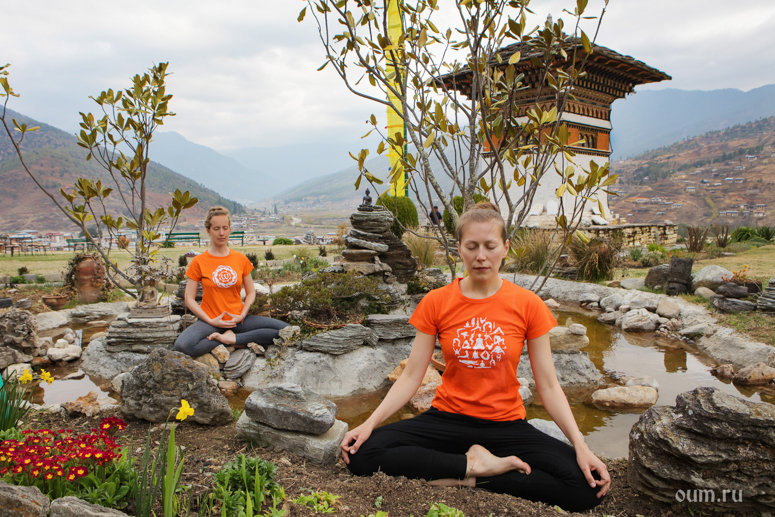
Hatha Joga. Jogos pagrindai.

Pakeisk save ir pasaulis aplinkui pasikeis

Skyrius:

Basics of Yoga

Meditacijos pagrindai. Ką pageidautina žinoti

Kas yra klasikinė joga

Kaip prisiminti praėjusius gyvenimus

Kaip teisingai kvėpuoti. Kvėpavimo technikos

Produktai organizmo valymui

Yoga for all

Throughout the ages, the practice of yoga has evolved. In ancient times, to practise yoga was to reach a state of higher consciousness, which not everyone was able to achieve. Today, however, yoga is seen as a universal and comprehensive practice, open to all, from the newest convert to the most experienced and accomplished. Yoga can be tailored to suit each individual’s capabilities, allowing students to develop and improve at their own pace – the ultimate aim being to fully master the art of meditation to reach an “accomplished state” with body and mind united in total harmony.

The Benefits of yoga today

Yoga is not simply an exercise in stretching, it is a philosophy of life that teaches the individual how to achieve a calm mind, which in turn helps to channel energy throughout the body.… skaityti daugiau


8 Limbs of Yoga: Transformation from Within

Patanjali’s system of yoga is a map of the process of awakening the possible human in each of us. The first four are associated with how a person conducts his life. They are:

• Yama. Do good. Do unto others as you would have them do unto you, The yamas encourage moderation and discourage violence, stealing, lying and possessiveness.

• Niyama. Be good. The niyamas give the ground rules for self-discipline and inner awareness. They encourage purity, contentment, chastity, self-study, and awareness of the spirit.

• Asana. Feel good. The physical body is a temple for the spirit. Yoga postures, or asanas, keep the body heathy and the mind calm, creating an atmosphere in which the spirit can more easily flow.… skaityti daugiau


How to Remember Your Past Lives: Methods and Indications

There are some questions that are very hard to explain.

Why one people born very poor others very rich?
Why one people born very healthy others very ill?
Why one people born with talents others without?
Why one people live more than 100 years, while others live only 1 month?
Why one people live in one place their whole lives, while others always travel?
Why one people born with good character qualities and others with bad?
Why sometimes we meet a person and it looks like we’ve known him for a very long time?
Why sometimes we meet a person and it looks so comfortable to be with?
Why sometimes you can fluently speak another language just after a few lessons?… skaityti daugiau


Why it is useful to read Vedic scriptures

If you were reading scriptures in your past lives, you recognize them. The more you read, the better level you can reach. This is the reason why in monasteries students were reading scriptures many times (scriptures that they’d gotten from guru).

Why it is important to study Vedic scriptures:

1. They give you examples of high morals and ethics, conscious and healthy life values, that help you orient yourself in life.

2. Allow yourself to connect with high energy when you concentrate on the lives of Mahatmas, Sages, and Rishis.

3. Gives the possibility to learn from other mistakes.

4. Allow to study laws of the universe.

5. Helps to remember previous lives.… skaityti daugiau


5 Koshas. 5 Bodies: Physical, Pranic, Mental, Astral, Bliss

According to yoga, human beings have 5 levels of energy. This energy coexists in a range from the most physical to the most subtle. They’re called Patta Kosha or Five Sheaths.

1) Annamaya kosha (Physical body).
2) Pranamaya kosha (Pranic body).
3) Manomaya kosha (Mental body).
4) Vijnanamaya kosha (Astral or Psychic or Intuition body).
5) Anandamaya kosha (Body of bliss).

Annamaya kosha or the physical sheath of the body, is called the food body because it depends on food, water, and air, which are gross forms of prana.

Pranamaya kosha is the pranic body, the vital sheath. Pranic body has an even more subtle nature. It supports and nourishes the physical body, pours energy into every cell of it, and the pranamaya kosha is about the same size and shape as the physical body.… skaityti daugiau


What is Mudra: Meaning, Origin and Purpose

Mudras have been used for centuries in various traditions of yoga, Ayurveda, Buddhist monks, and others to heal body, mind, and soul.

Mudra in Sanskrit means ‘seal’ or ‘sign.’ Mudra can be a certain position of a body part (gesture, finger position, tongue position) or position of the whole body (asana, like viparita karani mudra).

Mudras allow you to develop the ability to feel flows of life energy, prana, inside the subtle body and consciously control these flows. Mudras purify energy channels and mental centers in the subtle body. There are a lot of different mudras: Jnana, Dhyana, Nabhi, Viparita Karani, and many more.

Benefits of using mudras

1) Health becomes better.… skaityti daugiau


What is bandha: Mula, Uddiyana, Jalandhara. Benefits

Bandha – it is a special technique of yoga to keep and redirect prana energy inside the body. By doing bandhas, we gently but powerfully lock, tighten, and contract certain parts of the body and hold them. Also hold your breath by doing this. Then it stimulates our internal organs and muscles. When we contract those parts, they redirect prana energy to different parts of the body and impact our mind, emotions, actions. Body and mind become calm, they can rest and experience higher states of awareness.

Bandhas help us to prepare for meditation practice. It is important to learn to master bandhas gradually carefully in order not to harm body or mind.… skaityti daugiau


Pratyahara. Withdrawal of the Senses

When you fully master this level, you become independent from the 5 senses: hot or cold, pain or pleasure, hunger or thirst, beautiful or ugly. Pratyahara is step number 5 in Patanjali Yoga Sutras. Pratyahara in Sanskrit means “rejection, to avoid specific thought, avoidance.”

Imagine a turtle. When he hides, he pulls inside his head, hands, and legs. Same here. When thought comes, you learn to pull inside your senses. You learn to keep distance between your senses and sense objects. Another example. Imagine an octopus. Our senses always try to reach and realize thoughts that come to our mind.

For example. Come and have a thought to eat a cookie.… skaityti daugiau


7 Chakras in Human Body and Their Significance

In order to grow in yoga practice, you need to understand what energy processes happen inside and outside you. It states health condition, bad or good habits and other.

Chakra in Sanskrit means ‘wheel, circle, vortex’. Chakras – it is energy centers in our energy body (pranic body, non-physical body).

In the classical yoga system, there are 7 main chakras. They are based near our spine. According to Hatha Yoga Pradipika, in our energy body there are at least 72 000 energy channels, or nadis. Chakras are places where a lot of nadi energy channels connect in one place. Those chakras make an impact on our physical body, mind, and intellect.… skaityti daugiau


Reincarnation. Life after Life

Reincarnation – it is the ability of the soul to take new birth after death and get a new body. The body dies, but the soul reincarnates to a new body.

Some people believe, some don’t, and some have their own experience. Religions like Hinduism, Buddhism, Sikhism, and Jainism their principles based on karma and reincarnation. Western religions think that humans live one life and after death go to hell or heaven.

In most ancient scriptures, Vedas, the Rigveda, Yajurveda, Upanishadas, Mahabharata, and the Ramayana, we can find knowledge about reincarnation. In Buddhism and Hinduism, there is an understanding of samsara – the wheel of life and death. Sansara means the cycle of life and death when the soul is reborn life after life.… skaityti daugiau