


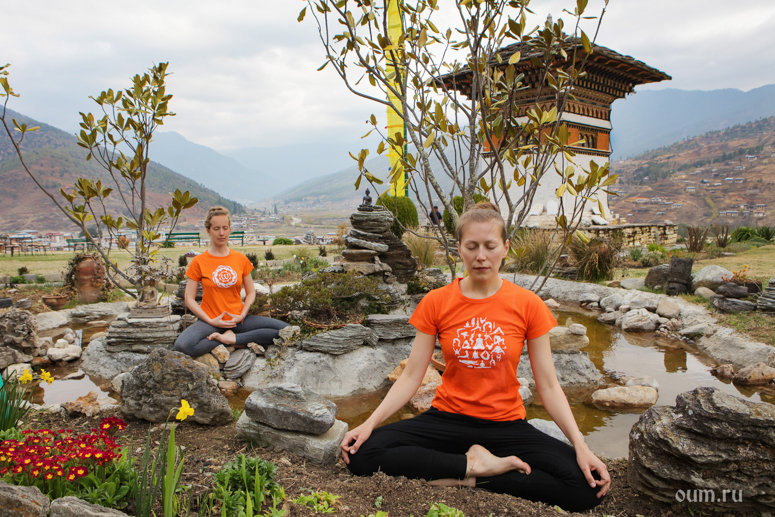

Short documentary about Vipassana – simple practical way to achieve peace of mind and to lead happy useful life. It is a logical process of mental purification of self observation. … skaityti daugiau
Pakeisk save ir pasaulis aplinkui pasikeis
Short documentary about Vipassana – simple practical way to achieve peace of mind and to lead happy useful life. It is a logical process of mental purification of self observation. … skaityti daugiau
Vipassana which means ‘to see things as they are’, particularly, ‘one’s own reality’, is one of India’s most ancient meditation techniques. It was re-discovered 2500 years ago by Gautama the Buddha. While the technique was lost in India, it was preserved in its pristine purity in Myanmar through the teacher-disciple tradition. In this august tradition, Mr. S. N. Goenka, a successful businessman of Indian origin from Myanmar, learnt this technique under the guidance of his teacher Sayagyi U Ba Khin.
Beginning in 1969, Mr. Goenka started to conduct Vipassana courses, as a representative of Sayagyi, spreading the technique in India and around the world. At present, there are 200+ Vipassana Meditation Centres and the courses are also held in 135+ non-centre locations in more than 100 countries.… skaityti daugiau
How the ancient teaching of Vipassana meditation spread from the remote forests of Upper Myanmar to reach every corner of the world. Part I of the trilogy, Overland to India (2019), tells the story of the young Westerners who traveled to India in the 1960s and early 1970s, encountered S. N. Goenka there and learned Vipassana from him.… skaityti daugiau
Marpa told Milarepa to practice solitary meditation in caves and mountain retreats, which, according to the biography, after many years of practice resulted in “a deep experiential realization about the true nature of reality.” Thereafter he lived as a fully realized yogi.
Milarepa lived during the so-called second dissemination of Buddhism in Tibet (10th–12th century), when Buddhism was re-introduced. Three pivotal figures in this Tibetan Renaissance were Rinchen Zangpo (958–1055), who translated sutras, tantras and commentaries; Atiśa (982–1054), whose student Dromtön founded the Kadam school of Tibetan Buddhism; and Marpa Lotsawa, the teacher of Milarepa, and himself regarded as student of Naropa. Marpa introduced tantric texts and oral instructions from the Bengali siddha tradition into Tibet, and Marpa’s purported connection with Naropa established the lineage of the Kagyu school, thereby reaching back to the Buddha himself.… skaityti daugiau
How Consumerism Ruins Our Planet and Finances: Consumerism is a problem for the earth and your wallet (aka your finances) because it influences you to buy stuff you don’t need. We’re told to buy, buy, buy! Spend money! Go shopping! Always get the newest and the lastest things! But constant consumption traps you in an endless cycle of wanting more, spending more, and never being satisfied. It’s time us all to break free. We have to reject consumerism by living more simply, buying secondhand (thrifting), embracing minimalism, and investing in experiences rather than items. By rejecting overconsumption, we can improve our money habits, save and invest more money, and work towards our financial goals.… skaityti daugiau
Buying designer brand products can trap you in a cycle of chasing status, sinking debt, and losing out on the chance to build real wealth. Let’s talk about why designer brands will keep you poor. In this video essay, we’re talking about how designer brands, from Hermes to Louis Vuitton to Rolex, are bad for your financial health. Spending money on designer items comes at a cost to your bank account and to our planet. These flashy brands create a fake illusion of wealth, but are they what actual wealthy people buy?… skaityti daugiau
The Creepy Line reveals the stunning degree to which society is manipulated by Google and Facebook and blows the lid off the remarkably subtle – hence powerful – manner in which they do it. Offering first-hand accounts, scientific experiments and detailed analysis, the film examines what is at risk when these tech titans have free reign to utilize the public’s most private and personal data.… skaityti daugiau
Philip was vice president of Citibank, specializing in corporate finance, mergers and acquisitions. At age 34, he was rated by Australian Business Magazine in their Top 40 Australian head-hunted executives.
At age 40, he witnessed cruelty on such a colossal scale that it affected him profoundly. He decided to give away everything he owned with warm hands, and die broke. ‘And so far, we are right on budget,’ he jokes.
Today he devotes his life to children, animals, the environment, the terminally ill, the homeless and the arts. He supports over 500 humanitarian projects in over 40 countries with schools, orphanages, shelters, sanctuaries, clinics, and scholarships.
In 2005 he received the Order of Australia.… skaityti daugiau
More and more companies are turning to neuromarketing. This controversial practice involves studying consumers’ brains, analyzing how and why we respond to certain stimuli, in order to influence our decisions. It’s based on the idea that 90% of the decisions we make are taken at a subconscious level. If a brand can speak directly to our ‘gut instinct’, bypassing reason, they will sell more products.… skaityti daugiau

